
10 Inspiring Digital Hall of Fame Examples for Schools and Organizations

Walk into almost any legacy high school or university building and you will immediately spot the brass plaque wall. It usually dominates an entire corridor. The metal plates are tarnished, the engraving fonts from 1985 don’t match the ones from 2015, and worst of all, the administration ran out of physical wall space ten years ago.
That is the core operational problem with traditional recognition hardware. You literally run out of room. Transitioning to a screen based format solves the real estate issue while completely changing how visitors interact with an organization’s history. Here is a look at ten ways schools and various organizations are successfully structuring their modern recognition displays.
1. The Multi Screen University Athletics Hub
Division I athletic departments generate massive archives of video content that usually sit uselessly on a server. A standard modern deployment involves a central interactive display flanked by two passive screens. The passive screens show a continuous loop of championship highlights or recent campus events. Visitors can walk up to the main console, filter by sport, graduation year, or specific athlete, and pull up lifetime stats. This approach keeps the lobby visually dynamic while allowing prospective recruits to easily find athletes who played their specific position. The hardware is ruggedized to handle constant public tapping.
2. The Space Saving High School Combo Board
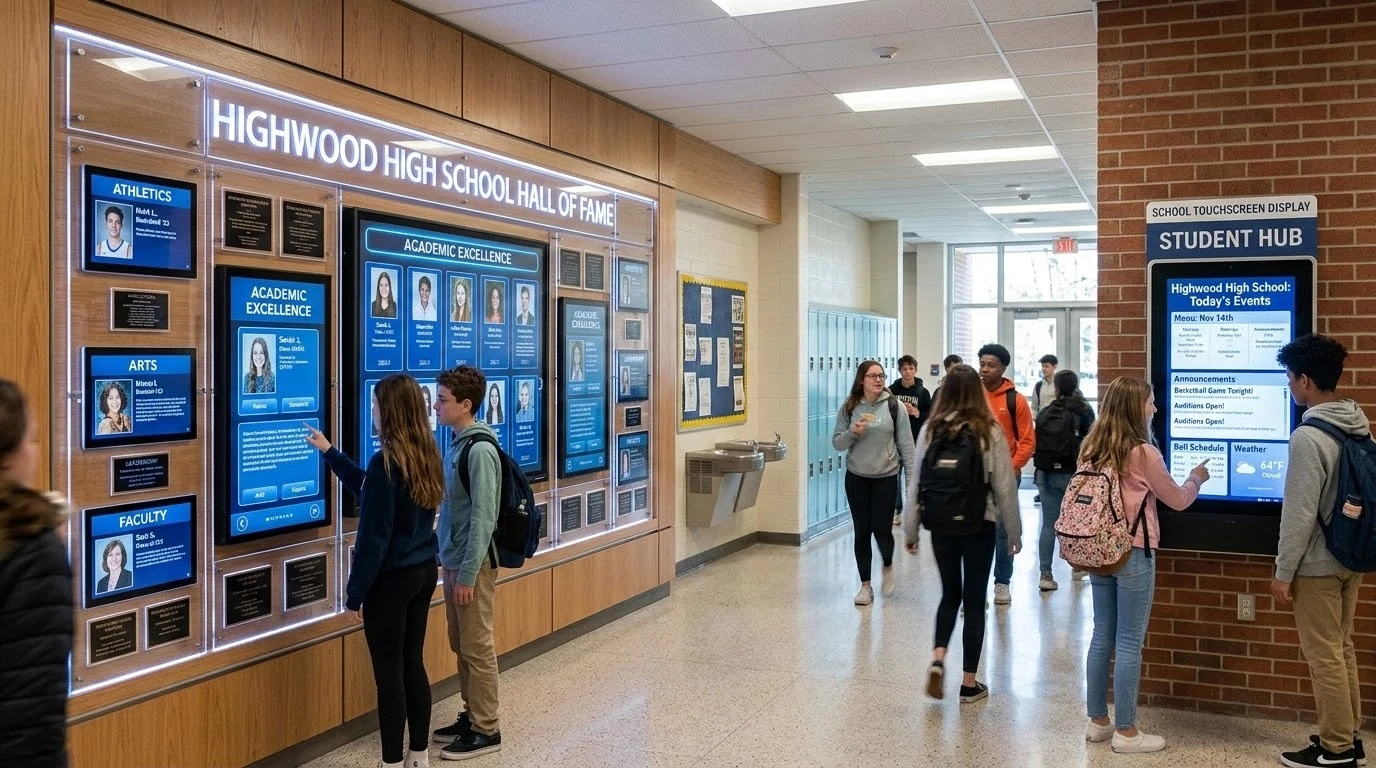
Public K-12 schools rarely have the massive budgets or the lobby space for sprawling multi-screen setups. The most practical solution in these environments is a single large-format touch panel mounted near the main office or gymnasium entrance. This single piece of hardware functions as a digital hall of fame for the entire school district. Administrators can set up the software to toggle between the valedictorian list, varsity sports records, and distinguished alumni profiles. It puts everything in one accessible spot without eating up an entire hallway. The school staff can update the records from a simple web dashboard the morning after graduation.
3. The Healthcare Foundation Donor Wall
Healthcare facilities rely on continuous community fundraising. The legacy model required purchasing new acrylic or metal plates every time a donor reached a higher giving tier. That gets expensive and requires constant maintenance requests. Today, healthcare foundations use touch displays to recognize contributors. A visitor can search a family name and instantly see a short text biography or a photo of the donor. It eliminates the ongoing physical maintenance costs of custom engraving while giving major donors a much more prominent piece of recognition.
4. Corporate Headquarters Timeline Displays
When established companies remodel their primary lobbies, the original framed photos of past executives often clash with modern glass and steel architecture. Corporate communications teams typically deploy widescreen touch panels that allow guests to scroll through a visual timeline of the company. A visiting vendor waiting in the lobby can read about the founding of the business or major product launches. It serves as a waiting room distraction and a subtle tool for establishing industry credibility with visiting clients.
5. Performing Arts Center Cast Archives
Theaters and regional arts centers generate a massive amount of visual history. Cast photos, old playbills, and set design sketches usually pile up in storage boxes. By deploying an interactive hall of fame in the main lobby, patrons can browse past seasons while waiting for the auditorium doors to open. Users can tap on a specific production from twenty years ago and see the cast list and photos from that night. It is a highly effective way to keep the community connected to the venue while archiving decades of local theater history in a public-facing format.
6. The Regional Sports Commission Kiosk
City and county sports commissions induct local athletes annually but rarely own a dedicated museum building. Instead, they partner with existing civic centers or arenas to install standalone kiosks. These freestanding units hold the entire database of local inductees. The software allows users to filter by decade, specific high school, or sport. This is a highly functional, low-cost deployment that gives a roaming commission a permanent physical footprint in a high-traffic area.
7. The First Responder Memorial Screen
Police stations, firehouses, and municipal training academies handle recognition very differently than a commercial business. The tone must remain highly dignified. These deployments usually feature a looping presentation of past chiefs, medal of valor recipients, and memorialized officers. The interfaces are purposely locked down and simple. The focus is entirely on respect and readability rather than flashy animations or complex search menus. Hardware is often recessed directly into the wall to create a clean, permanent look.
8. Trade Association Leadership Galleries
National trade organizations operating out of cities like Washington DC or Chicago frequently host visiting members from across the country. Their lobbies need to reflect the entire breadth of the industry. Instead of hanging standard oil portraits of past presidents, these associations use interactive screens to profile industry innovators and past board members. A visitor can tap a profile to read about the specific legislation or industry standards that person helped establish.
9. The University Alumni Career Network
Some of the most effective recognition walls do more than just display old photos. Tier-one universities are now connecting their digital displays directly to their alumni networking databases. A current student walking through the engineering building can stop at the screen, filter distinguished alumni by their current corporate sector, and read about their career trajectory. It turns a standard vanity project into a functional networking tool for the student body. The system pulls data directly from the university’s existing alumni portal, removing the need for double data entry.
10. Municipal Chamber of Commerce Spotlights
Local chambers want to highlight business of the year winners and prominent civic leaders. Wall space in a typical chamber office is usually tight. A wall-mounted display allows them to recognize decades of local business owners without cluttering their main conference rooms. When a new winner is announced at the annual banquet, the chamber staff simply uploads a new image and a text block through a content management system. The lobby display updates instantly the next morning.